 自适应光学 - 可变形镜 - 波前传感器 - 空间光调制器
全站搜索
Search the entire website
整站搜索产品中心新闻中心
点击开始搜索
热门搜索
空间光调制器 波前测试仪DOEDMD
Search the entire website
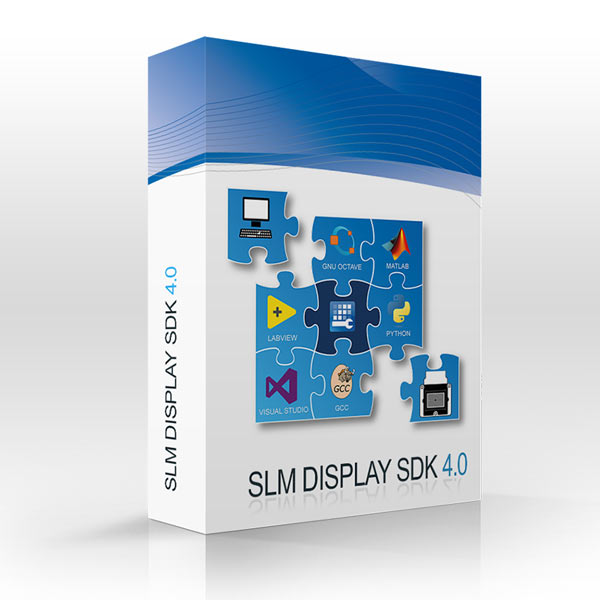
The HOLOEYE SLM Display Software Development Kit (SDK) is an interface to show images and phase arrays directly on the SLM within many programming languages. It also supports data manipulation functions like phase overlay calculated from Zernike coefficients, optical beam manipulations, and data transformations.
The SDK enables the use of multiple SLM devices connected to the same computer within the same application independently. It is also possible to tile the SLM display area to use multiple functions independently on a single SLM display device or use multiple SLM devices merged within an NVIDIA Mosaic setup to allow perfect hardware synchronization.
To use the SDK you need to have one of the following supported development environments installed:
The current SDK version is available for Microsoft Windows 10 and above (Windows 64 bit versions). The SDK supports all current HOLOEYE Spatial Light Modulators with resolutions up to 4160 x 2464 pixel.
The initialization of the SLM or multiple SLMs [within the target platform] is reduced to the minimum required amount of code. It is possible to use multiple SLM devices or split one SLM display into multiple SLM canvas.
Data can be transferred to the SLM from floating point or integer phase or image data arrays. The SLM Display SDK supports upload and display of data stored in all common image file formats.
The loaded data can be addressed including beam manipulation overlay functions like blazed gratings (beam steering or reposition of the projected hologram), lens functions (focus adjustment), Zernike functions or Wavefront compensation data (which typically is delivered with the SLM).
The SDK also includes built-in speed-optimized commands for the display of essential functions (e.g. lenses, gratings) on the SLM.
The SDK permits sophisticated management of data uploaded to the graphics adapter’s memory (VRAM) and provides detailed information about the timing when the data is actually displayed on the SLM at high frame rates.

We provide a set of code examples which demonstrate the features of the SLM Display SDK.
The examples demonstrate the basic functions and highlights the values which can be adjusted.
We recommend using the examples to start working with the SDK. Even if you have limited experience in programming within one of the supported environments, the examples offer a straightforward starting point as you get immediate feedback on how it works and how changes of parameters affect the result.

To get access to the SLM Display SDK, please register at our download website.
(LC 2012, PLUTO, PLUTO-2 & 2.1, LETO-3, ERIS):
Minimum Requirements:
Processor: Dual core CPU with 2 GHz (e. g. Intel Core 2 Duo E6320)
Memory: 2 GB
Graphics Card: DirectX 11 capable GPU with minimum 256 MB Video RAM (e.g. Nvidia Geforce 7800 GT or built-in Intel GPU or equivalent)
Recommended Requirements:
Processor: Quad core CPU with 3 GHz (e.g. Intel Core i5-2500)
Memory: 8 GB
Graphics Card: Nvidia or DirectX 11 capable GPU with 2 GB Video RAM (e.g. Nvidia GTX750)
(GAEA-2):
Minimum Requirements:
Processor: Quad core CPU with 3 GHz (e. g. Intel Core i5-4690)
Memory: 8 GB
Graphics Card: DirectX 11 capable GPU with minimum 2 GB Video RAM and HDMI 2.0 output (e.g. Nvidia GTX950 or similar)
Recommended Requirements:
Processor: Quad core CPU with 4 GHz (e.g. Intel Core i7-7700k)
Memory: 16 GB or more
Graphics Card: Nvidia or DirectX 11 capable GPU with 8 GB Video RAM and HDMI 2.0 output (e.g. Nvidia GTX1070)
OCT(光学相干断层扫描)按信号采集方式分为:时域 TD-OCT、频域 FD-OCT(含谱域 SD-OCT、扫频 SS-OCT);在此基础上还有多种功能 / 架构变体。 表格 要不要我把以上内容浓缩成一页选型决策清单,直接帮你按应用场景快速锁定最合适的 OCT 类型? OCT扫描系统 搜索 2 ...
查看全文
意大利Dynamic Optics相关问题 1、意大利Dynamic Optics公司的变形透镜是否区分光路方向? 答:变形透镜的主要结构是双层玻璃,中间填充大折射率的液体介质。透镜的光路方向没有区分,双向都可以透光。 2、意大利Dynamic Optics公司的透镜式变形镜能校正几阶像差? ...
查看全文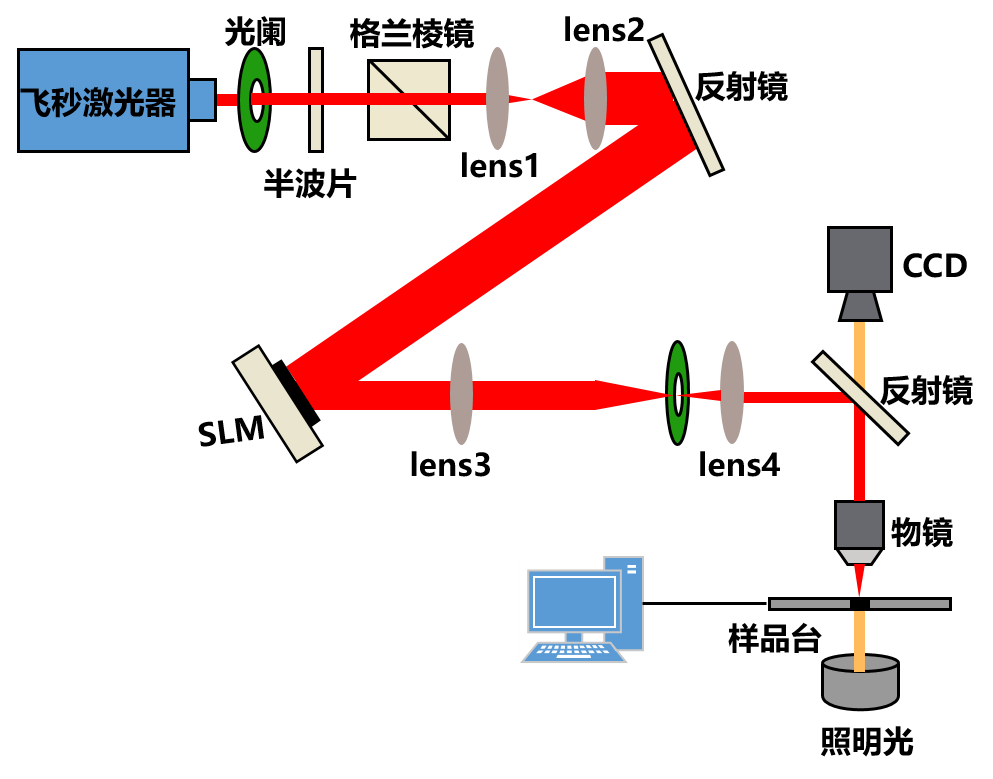
实验系统配置 系统原理 激光能量由半波片和格兰棱镜控制,通过旋转半波片实现激光能量控制。光束经过由透镜1和透镜2组成的扩束器、反射镜后,入射到SLM的液晶面。SLM通过加载闪耀光栅,改变入射光的相位分布,实现光束反射角的调制。SLM是一个衍射光学元件,被调制的...
查看全文
摘要 近年来,随着涡旋光束和空间结构光场的发展或应用,涡旋光束轨道角动量(OAM)的检 测成为重要的课题。本文基于空间光调制器(SLM)的全息衍射光栅方法,通过设计强度 分布和衍射角可调的衍射光栅对单模涡旋光束的OAM进行检测。课题组首先从自行设计的 一维全息...
查看全文