 自适应光学 - 可变形镜 - 波前传感器 - 空间光调制器
全站搜索
Search the entire website
整站搜索产品中心新闻中心
点击开始搜索
热门搜索
空间光调制器 波前测试仪DOEDMD
Search the entire website
Press Release / November 21, 2024
Researchers from the Fraunhofer Institute for Photonic Microsystems IPMS, in collaboration with HOLOEYE Photonics AG, have developed a compact LCOS microdisplay with high refresh rates that enables improved optical modulation. This innovative microdisplay will be presented for the first time at the 31st International Display Workshops (IDW) 2024 in Sapporo, Japan.
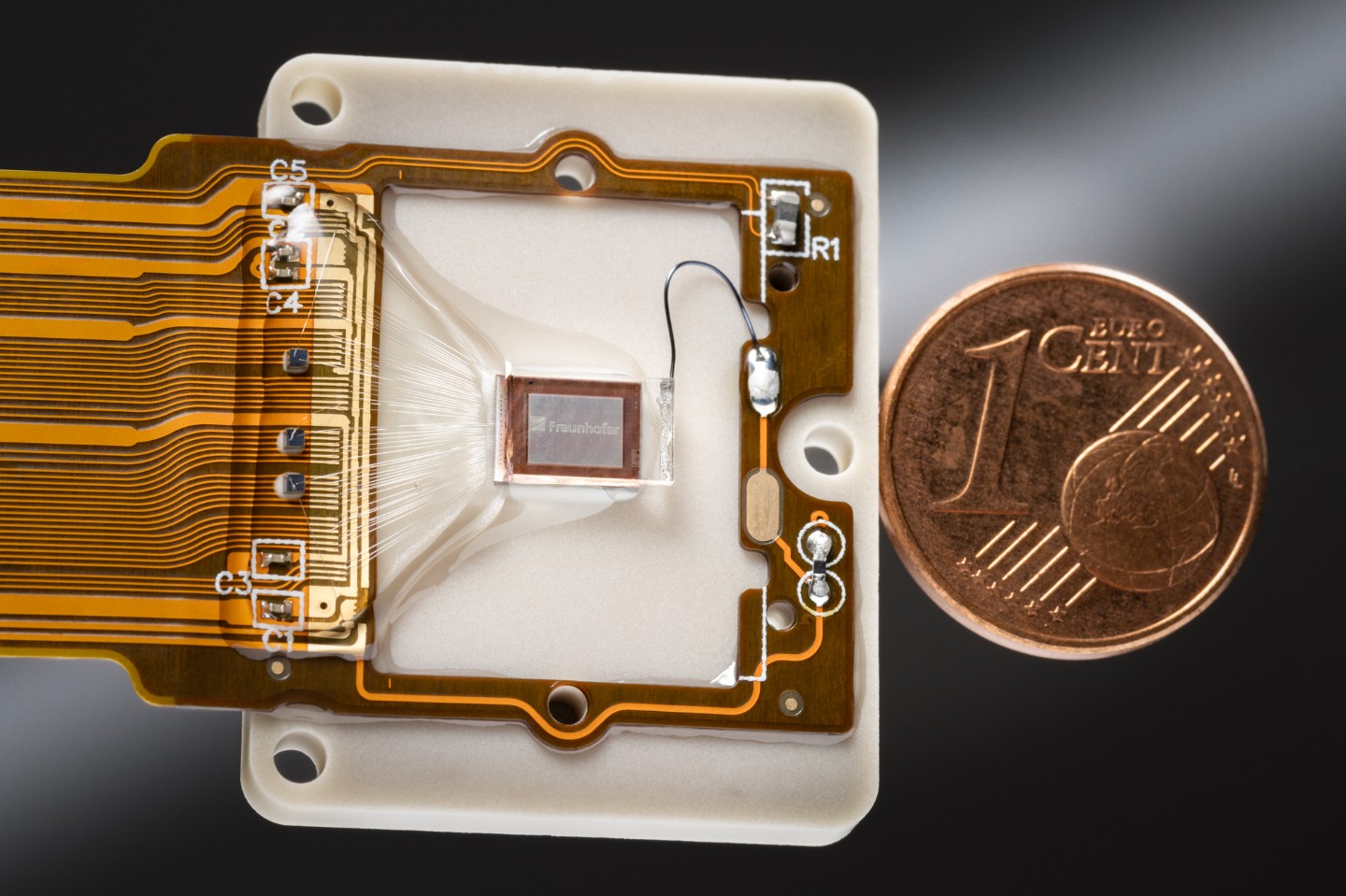
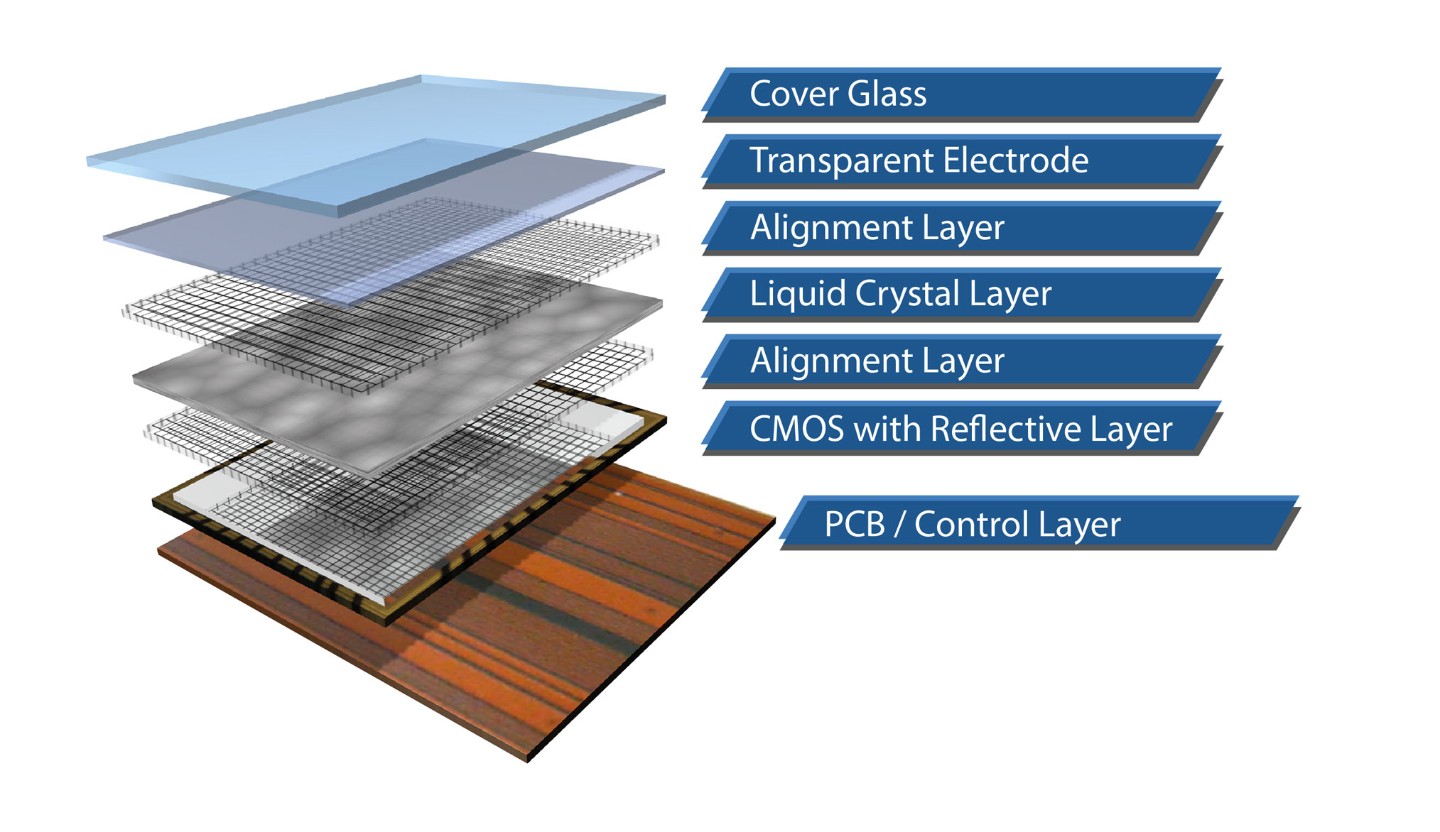
LCOS microdisplays are characterized by their low power consumption, small size, and lightweight design. They are used in switchable adaptive optics, particularly as phase modulators, and as projection displays in augmented or virtual reality (AR/VR). Phase modulators, also known as spatial light modulators (SLMs), are used in biological imaging and microscopy, among other applications, for wavefront correction and beam shaping. The goal is to improve image resolution, minimize distortions caused by biological tissue, or protect samples. The new LCOS microdisplay from HOLOEYE and Fraunhofer IPMS utilizes an innovative CMOS backplane that enables high-speed light modulation.
Matthias Verworn from HOLOEYE explains: “With the new backplane generation from IPMS, we can realize compact micro-SLMs and specifically address applications with requirements for a small form factor. The very small pixel size enables larger diffraction angles, while the fast interface supports high clock rates and flexible, application-specific display addressing options.”
The unique features of the new LCOS microdisplay open new possibilities in wearable holographic AR systems, in optogenetics, e.g. for structured photostimulation of neurons, as well as in quantum optics and quantum computing.
Philipp Wartenberg, Head of IC and System Design at Fraunhofer IPMS, states: “The newly developed backplane architecture of our compact LCOS microdisplay significantly expands the possibilities for light modulation and far exceeds existing refresh rates. This is enabled by the integration of a complete framebuffer and a high-speed interface to the pixel matrix, achieving a data transfer rate of up to 576 Gbit/s to a pixel array with a resolution of 1440 x 1080 pixels and a pixel size of 2.5 µm.” HOLOEYE plans to launch the first products with this LCOS light modulator
实验系统配置 系统原理 激光经偏振片调整为线偏振光,后经过λ/4波片转化为圆偏振光,扩束后通过螺旋位相片并利用角向提取器提取角向偏振成分,至此光束变为均匀角向偏振光。通过两个夹角为π/4 的二分之一波片后,角向偏振光便转化为均匀的径向偏振光。系统通过将径向...
查看全文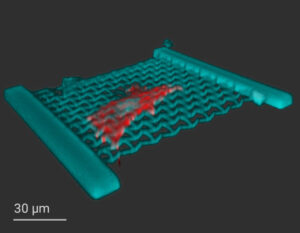
生物超材料的有效弹性性能对于在适合的超材料基质上进行细胞培养的影响很大。最近,使用类似硅弹性体材料进行双光子光刻微纳加工取得了突破进展,实现了创建符合细胞大小和变形性标准的微结构生物超材料。在这项研究中,科学家利用双光子聚合技术,在使用IP-PDMS光敏...
查看全文
数字全息显微镜(Digital holographic microscopy,简称DHM)是数字全息技术在显微领域的应用,也被称为全息显微术。与其他显微技术相比,数字全息显微镜并不直接记录被观测物体的图像,而是记录含有被观测物体波前信息的全息图,再通过计算机对所记录的全息图进行数...
查看全文